
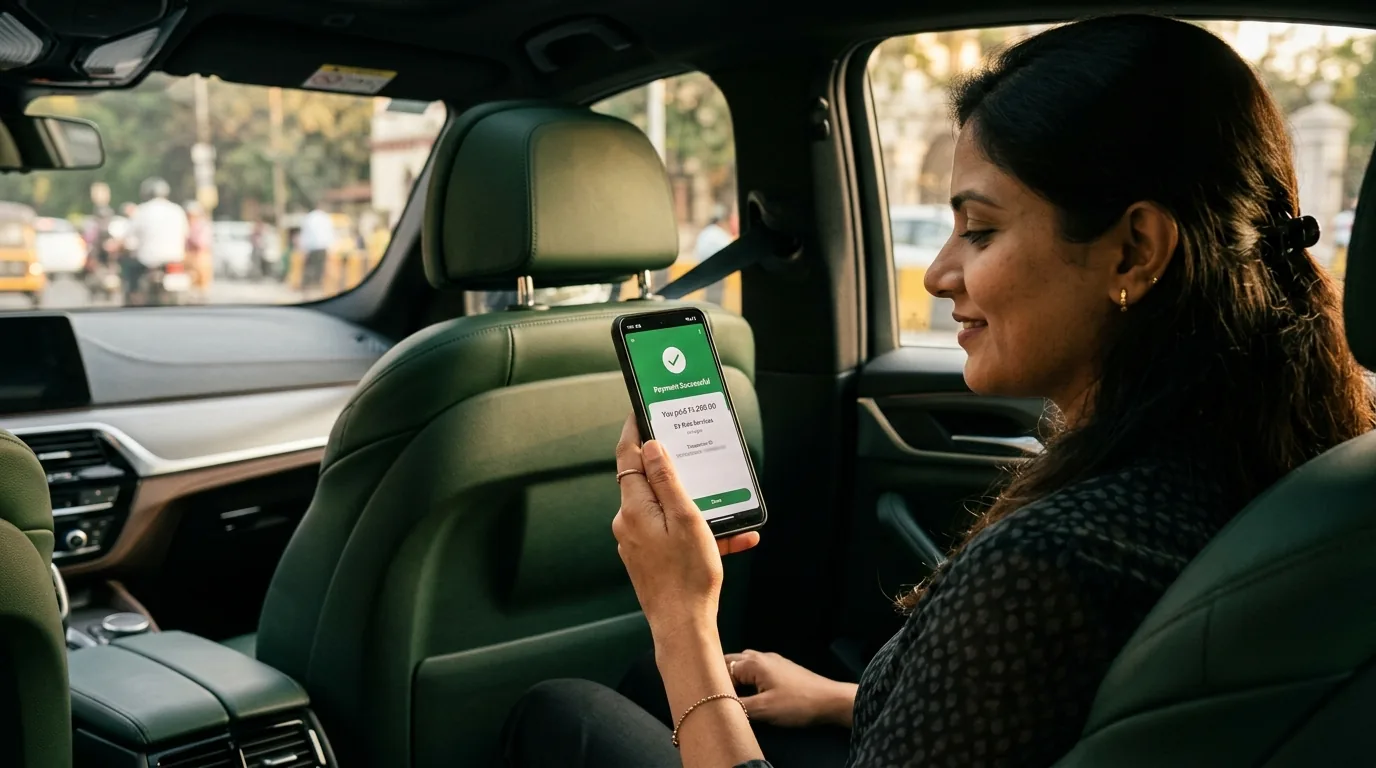
Most intercity cab platforms ask for payment upfront. You open the app, see a fare, and the amount is either charged or pre-authorized on your card before the driver has even moved. Orbitmiles does the opposite. You book the ride, take the ride, and pay once it is complete.
This is not a side-effect of older infrastructure. It is a deliberate choice we get asked about often enough to explain in full.
Advance Payment Is Insurance for the Operator, Not the Customer
When a company asks you to pay upfront, they are protecting themselves. They want the money in hand before they are exposed to the risk of delivering badly. That is a fine business decision — but it quietly transfers the risk from the company to you.
If the car is late, you have already paid. If the driver takes a longer route, you have already paid. If a meeting gets cancelled ten minutes after booking, you have already paid. Every variable that could go wrong in a three-hour intercity ride is underwritten by the customer from the moment of booking.
We did not want to build that kind of business. Post-ride payment means we carry the operational risk — the risk of delivering the ride as promised — instead of shifting it to the passenger before we have earned anything.
Cancellation Should Not Cost You Anything You Have Not Used
Plans change. Flights get rescheduled. Meetings run long. Someone calls and says "come home instead." Real travel does not always follow the plan written down at the time of booking.
With advance payment, cancellation turns into a refund process — support tickets, pending reversals, "5–7 business days" messages on your statement. With post-ride payment, cancellation is a message. You did not take the ride, so there is nothing to refund. The math is that simple.
This matters most for the bookings that are hardest to predict: early-morning airport runs, late-night pickups, corporate travel with shifting calendars. Post-ride payment removes the penalty for honesty about changing plans.
Getting Paid Only After the Ride Forces Us to Deliver
There is a quiet operational consequence to charging after the ride. If we only get paid when the journey is complete, the journey has to actually get completed — not 80 percent of the way, not "close enough," but all the way to the drop-off address.
This is structural skin in the game. A no-show is a ride we do not get paid for. A driver who drops a booking mid-route is a ride we do not get paid for. A customer who arrives feeling the ride was below standard has a stronger negotiating position because the fare has not yet settled.
Advance payment lets an operator absorb the occasional bad ride without an immediate revenue impact. Post-ride payment does not. That pressure sits on us, not on you. That is where it belongs.
You Pay for What Happened, Not for What Was Estimated
Every advance payment is a bet on a future trip. Route, time, waiting, stops — none of it is known at booking. Platforms manage this gap in one of two ways: they pad the fare so they almost never lose money, or they quote tightly and send reconciliation charges after the fact.
Post-ride fares are the actual fare for the actual ride. With Orbitmiles the quoted fare is a commitment — the amount quoted at booking is what you pay at the end — so there is no padding and no post-trip adjustment either. The fare, the ride, and the charge all line up.
Pre-Authorization Holds Are a Hidden Cost Customers Rarely Talk About
Even when "advance payment" is dressed up as a temporary hold on the card, that money is unavailable to you until the hold releases. On a debit card or a tight credit line, this is a real cost.
A ₹3,000 hold for a ₹2,700 ride ties up ₹3,000 of your available balance for the duration of the trip and whatever reconciliation window the platform uses after. For a frequent traveller, these holds can stack — two bookings, an airport trip, and a corporate reservation all holding card balance at once. Orbitmiles issues no pre-authorization holds. The charge happens once, after the ride, for the actual fare.
How Payment Actually Works at the End of the Ride
Post-ride payment only works if settling up is frictionless. We support the three payment methods Indian travellers actually use, so there is no awkward moment at the end of the journey.
- UPI — the fastest option. Scan the QR or pay to the driver's UPI ID using any UPI app. Instant confirmation, no card handling.
- Online payment link — sent over WhatsApp or SMS, supports debit cards, credit cards, and netbanking. Useful for corporate travellers who need a card receipt or want to pay from a specific account.
- Cash — exact fare in rupees, handed to the driver. No minimum, no surcharge, no change problem on standard fares.
Whichever option you choose, the fare is the fare that was quoted at booking. A ₹2,700 UPI payment, a ₹2,700 card payment, and a ₹2,700 cash payment all represent the same trip on the same terms.
Disputes Should Be About Something That Actually Happened
You can dispute a charge. It is much harder to reverse a payment you authorized before the service even began. Post-ride payment means that if something went wrong, the conversation is grounded in the specifics of a real journey — the route, the time, the fare.
That is a cleaner dispute. It resolves faster. It favours the rider in exactly the way it should — the fare is being challenged against a ride that already happened, not a ride that was only promised.
The Trust Direction We Picked
Every payment model is a statement about who trusts whom.
Advance payment says: we trust you less than we trust ourselves, so pay first. Post-ride payment says: we will earn it. Ride first, then settle.
That is the direction we picked, and we are not walking it back. If the ride is worth paying for, you will pay for it at the end. If it is not, you should not have to chase a refund to make that right.
Frequently Asked Questions
Do I need to pay anything when I book an Orbitmiles cab?
No. Booking an Orbitmiles cab does not charge your card, hold any amount, or require a deposit. You confirm the ride — the fare is paid at the end, after the ride is complete.
What happens if I cancel my Orbitmiles booking?
If you did not take the ride, you do not pay for it. There is no refund queue because there is no advance payment. Cancellation is handled directly over WhatsApp or phone with no deduction.
How do I pay for my Orbitmiles ride?
Payment is collected after the ride ends. You can pay via UPI, an online payment link that supports debit cards, credit cards, and netbanking, or in cash. The fare matches exactly what was quoted at booking — no surge adjustment, no toll top-up, no post-trip reconciliation.
Is the post-ride fare different from what was quoted at booking?
No. The fare quoted at booking is exactly what you pay at the end. Traffic, route, and time of day do not change the amount. Post-ride simply means the charge happens after the ride, not a different price.
What about corporate bookings — is invoicing handled the same way?
Yes. Corporate rides are invoiced after travel completion with full breakdown — route, vehicle, fare, and GST where applicable. There is no pre-payment requirement for monthly corporate accounts.